
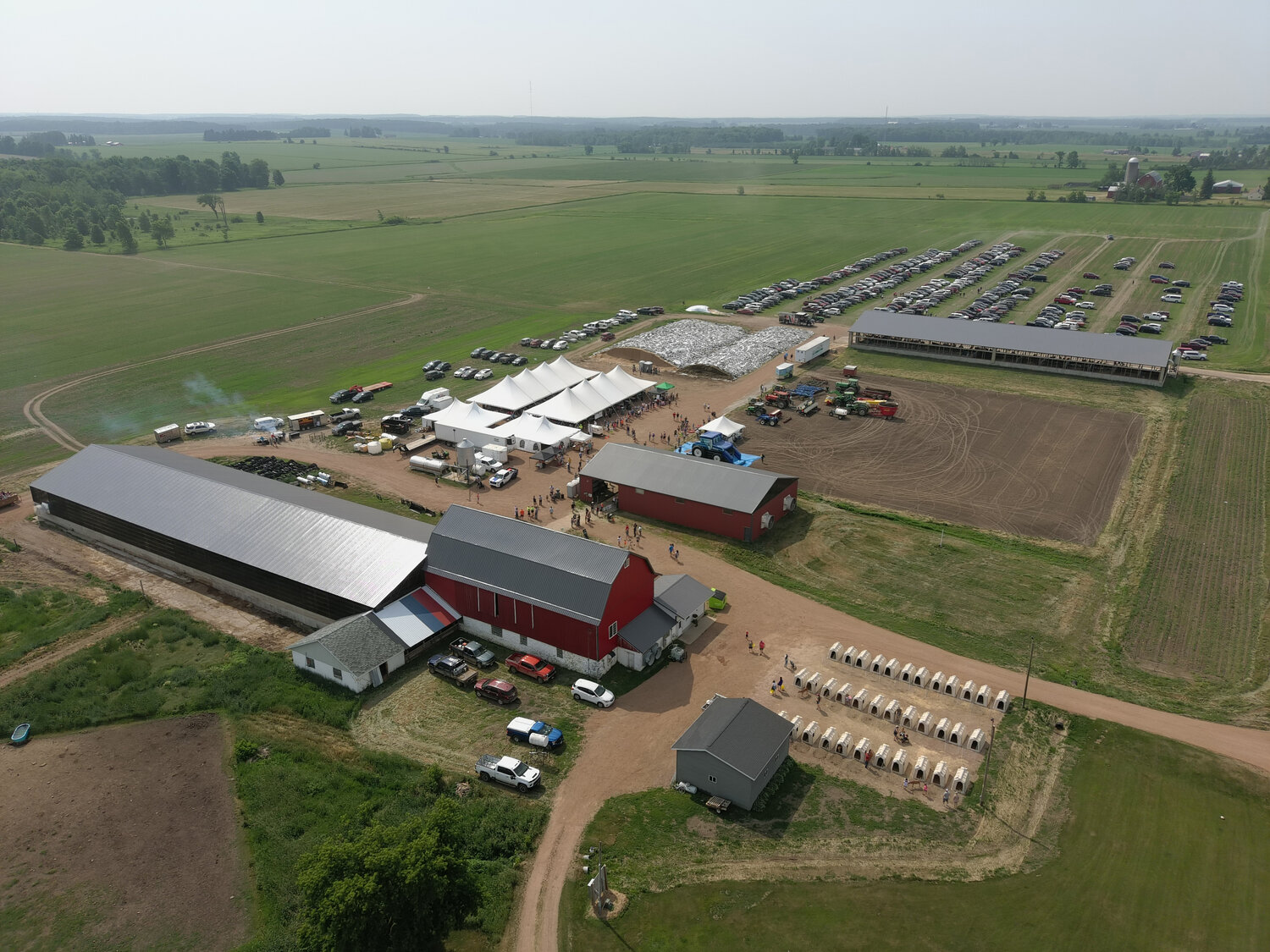


MARSHFIELD – Wisconsin Farm Technology Days has been bringing agricultural innovation and education to farming communities since 1954, when the first event—originally called Farm Progress Days—was held in Waupaca County.
What began as a relatively modest gathering created by UW agronomist Henry Ahlgren to showcase agricultural advances outside the confines of the university campus has evolved into one of the nation's largest outdoor agricultural shows, attracting tens of thousands of visitors annually.
The event's format has expanded significantly from its early days, now typically spanning three days and featuring hundreds of commercial exhibitors, educational demonstrations, and field trials.
Farm Technology Days serves as a vital connection point between farmers, agricultural researchers from the University of Wisconsin system, equipment manufacturers and agribusiness companies.
Each year's host county invests substantial resources into preparing farm sites that showcase modern agricultural operations, from dairy and crop production to emerging sectors like renewable energy and precision agriculture.
The show has rotated among different host counties across Wisconsin, allowing various communities to highlight their regional agricultural strengths while exposing farmers from all corners of Wisconsin to diverse farming operations and landscapes.
The Marshfield area has played host to the show in 1960, at the Wood County Hospital Farm and Marshfield Agricultural Research Station, and in 2011, at Seehafer Acres, and then again in 2018 at the D&B Sternweis Farms and Heiman Holsteins.
The community has also played a role in the nearby Clark County shows in 1983, at the Clark County Health Farm near Owen, in 2005 at Malm’s Rolling Acres near Loyal, and most recently, in 2022 at Roehl Acres in Loyal.
In 2026, Farm Technology Days will return to the Marshfield area — at Redetzkes’ No Joke Dairy near Stratford.
The Redetzke family is a fifth-generation dairy producer, known for their commitment to innovation and sustainability.
The farm is owned by Matt and Brittany Redetzke and Matt's brother Sam Redetzke and has been in the family since 1911, when Otto and Ottelia Redetzke built the original barn.
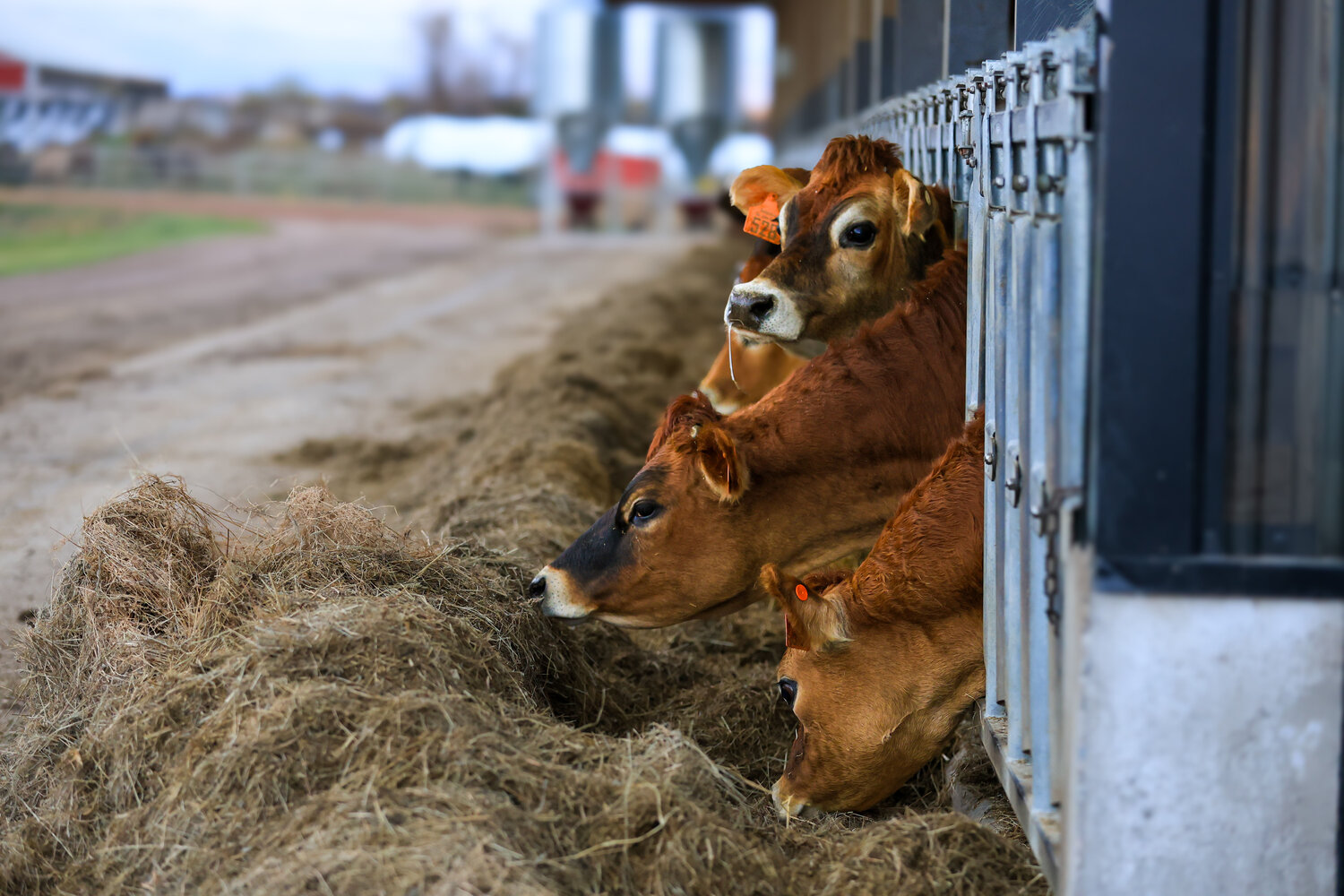
Redetzke's No Joke Dairy is home to 400 head including young stock and currently milks in the original tie-stall barn with plans to expand to a new barn using six robotic milkers.
‘We’re Serious’
A “We’re Serious” event theme is setting the tone for “a powerful celebration of progress, people, and pride in Wisconsin agriculture.”
“Wisconsin’s agriculture heritage, paired with No Joke Dairy’s reputation for quality and generational success, positions FTD 2026 as a celebration of everything that makes Wisconsin farming exceptional. Wisconsin agriculture is serious about its future; serious about innovation, serious about people, and serious about the pride that comes from being a national leader in farming,” explained Farm Technology Days Publicity & Promotion Chair Mason Gukenberger.
“When (farm co-owner) Matt Redetzke says that hosting Farm Technology Days is about ‘celebrating everything great about Wisconsin agriculture,’ we’re emphasizing a set of core values and industry achievements that define who we are, and what makes Wisconsin agriculture truly exceptional. For FTD 2026, the goal is to bring these strengths front and center through demonstrations, exhibits, storytelling, and the overall on-farm experience.
“When we say FTD 2026 ‘celebrates everything great about Wisconsin agriculture,’ we’re celebrating: innovation and tradition working hand-in-hand; unmatched dairy excellence, the strength of family farms and rural communities; industry leadership in manufacturing and technology; a deep commitment to environmental stewardship; a passionate next generation ready to lead and the community spirit that makes Wisconsin agriculture truly special.
“Wisconsin combines groundbreaking innovation with time-tested stewardship—proving that progress doesn’t mean abandoning our roots.
“Dairy isn’t just an industry in Wisconsin, it’s an identity. FTD 2026 showcases what it takes to be ‘America’s Dairyland.’”
The next generation
The Redetzke farm is the ideal place to focus on another important aspect of Wisconsin agriculture.
According to the University of Wisconsin, the state had 58,521 farms in 2022, representing a decline of 9.7% (6,272 fewer farms) from 2017.
The dairy sector has experienced particularly dramatic declines.
In 1997, there were 24,065 dairy farms in Wisconsin, but by 2022, that number had declined by 74.2% to just 6,216 farms.
“The future of Wisconsin ag depends on the next generation—something Marathon County already champions,” Gukenberger added.
“We plan to highlight: FFA, 4-H, and youth leadership programs; technical colleges & university research; career pathways in ag tech, dairy, mechanics and agronomy (and) hands-on learning opportunities at the event.
“Wisconsin is serious about cultivating leaders who will drive agriculture forward.”
A shared sense of purpose
Gukenberger said that hosting the event demonstrates what makes Wisconsin special, including thousands of volunteers; area businesses stepping up; partnerships across local, state and industry organizations; and a shared sense of purpose.
“Coordinating an event of this size requires a highly structured and collaborative approach, supported by dozens of committees and hundreds of volunteers across Marathon County,” he said.
“Planning for the July 14–16, 2026, show is already well underway, using a proven organizational model that has guided Wisconsin Farm Technology Days for decades.
“The process begins with the formation of an Executive Committee, which provides overall leadership, sets priorities and ensures alignment with state-level FTD standards.
“From there, more than a dozen specialized committees, ranging from Fundraising and Field Demonstrations to Grounds, Youth Education, Publicity, and Volunteer Coordination—take responsibility for their individual areas.
“Each committee is led by local volunteers with expertise in their respective fields, ensuring decisions are practical, efficient and rooted in local knowledge.
“Monthly all-committee meetings, regular planning sessions, and coordinated timelines help keep every team aligned as the show approaches. Communication is supported through shared project management tools, coordinated site visits and close collaboration with state FTD advisors and the Redetzke family.”
What’s in store
Although the field demonstrations are still in development, Gukenberger said that partnerships are taking shape, working closely with a wide range of regional Wisconsin agricultural businesses, technology companies, safety educators and service providers to design a “diverse and engaging lineup of live demonstrations, both in the demo fields and throughout Tent City.”
“Our goal is to curate demonstrations that represent the full breadth of Wisconsin agriculture, from field operations to feed quality management, from emerging technologies to time-tested practices and from family farms to large-scale enterprises, while also reinforcing a core value of our industry: safety is serious, non-negotiable and essential for every operation,” he said.
“By working with our local and regional industry partners, we aim to create demonstrations that are educational, practical, immersive and grounded in the real challenges, innovations and safety priorities facing today’s farmers.
For more information on the 2026 event, held July 14-16, visit www.wifarmtechdays.org or follow #WFTD2026 and @WIFarmTechDays on social media


Comments
No comments on this item Please log in to comment by clicking here